International Doctoral Mobility: Journey and Advice
How do international doctoral students build their scientific mobility path? What obstacles do they encounter and how do they overcome them? As part of its mission to support doctors and doctoral students, the Association Bernard Gregory (ABG) has gathered the testimony of Adam Aitbenlaassel, a Moroccan PhD monitor on scientific mobility at CY Cergy Paris University.
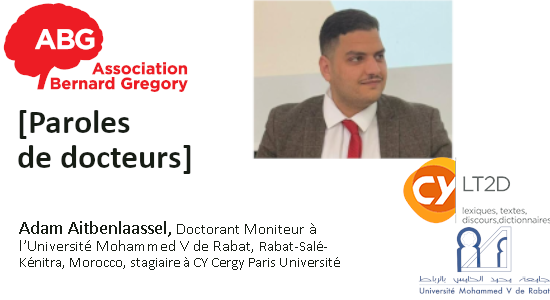
Through his responses, Adam shares his personal vision of doctoral mobility: the deep motivations that led him to France, the concrete challenges he faced, and the strategies he developed to enhance his experience. His testimony offers practical advice and avenues for reflection for all researchers in the humanities and social sciences considering an international experience.
More than a simple practical guide, this interview reveals how scientific mobility transforms not only the academic path, but also the professional vision and the way of conceiving the researcher's role in society.
Background and motivations: why France?
How to identify the host laboratory?
Scientific contribution and career perspectives
Advice for future candidates: three essential recommendations
Background and motivations: why France?
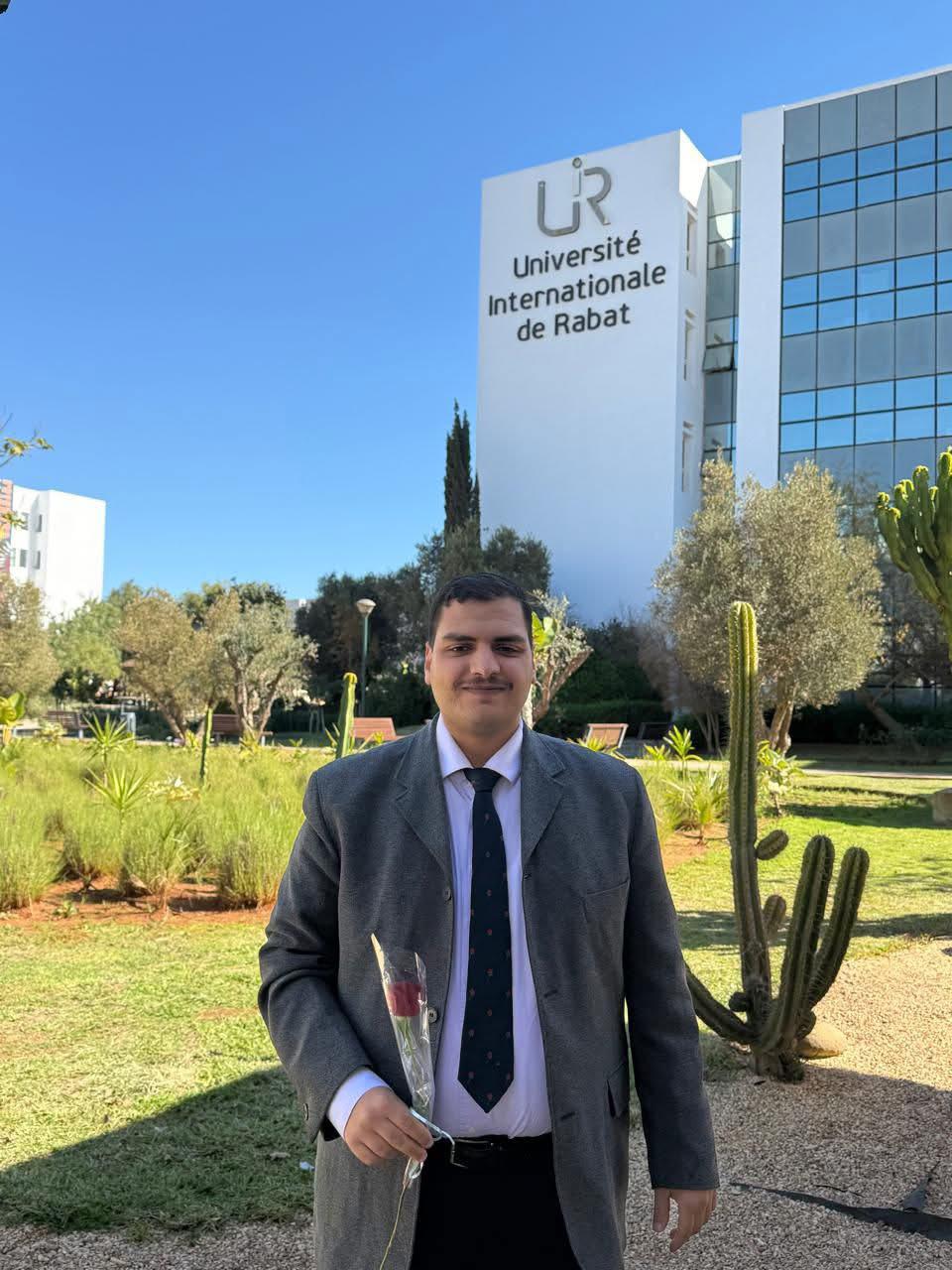 A PhD monitor with a committed background
Adam introduces himself: “My name is Adam Aitbenlaassel, a PhD monitor at Mohammed V University of Rabat, where I am preparing a thesis entitled 'Discourse on international political crises and its impact on the economy, education and development', under the supervision of Professor Ismail Moussaoui, within the laboratory of education sciences, humanities and languages.”
He is currently pursuing his second scientific stay at CY Cergy Paris University in the LT2D laboratory (Lexicons, Texts, Discourses, Dictionaries), under the supervision of Professor Luciana Radut-Gaghi, a specialist in discourse analysis.
The PhD monitor program
Adam explains this new Moroccan program: “The PhD monitor is a new project of the Moroccan government, launched in 2023 by the Ministry of Higher Education, Scientific Research and Innovation, in partnership with CNRST. It aims to strengthen human capital in higher education and research institutions and to encourage the best students to carry out scientific activities related to the preparation of their thesis.”
“Concretely, the monitorat is a research-training contract that allows doctoral students to teach courses and tutorials, facilitate scientific and pedagogical workshops, participate in academic events and carry out international doctoral mobility, in parallel with writing their thesis.”
Three fundamental reasons for choosing France
When asked what motivated him to seek an opportunity in France, Adam responds with conviction:
A deep cultural and intellectual affinity
“First, there is a strong cultural and intellectual affinity: France has long occupied a central place in the French-speaking academic world, and its scientific, literary and philosophical heritage has profoundly influenced my training. I have always admired the richness of French culture, the vitality of its intellectual debates, as well as the exceptional quality of its university infrastructure—libraries like the BNF François Mitterrand or Richelieu sites are real treasures for a researcher.”
A scientific necessity
“But beyond cultural attachment, my choice is above all scientific. The theoretical framework of my thesis is based on the theories of the French school of discourse analysis, particularly those that developed around Michel Pêcheux, Michel Foucault, Patrick Charaudeau, Dominique Maingueneau. By studying discourse on international political crises, I seek to understand how language shapes the perception of crises, influences political decisions and ultimately has an impact on key areas such as the economy, education or development.”
A human and intellectual openness
“Finally, there is a more personal motivation: I consider scientific mobility not as a simple training step, but as a human and intellectual experience that opens new horizons. Working in an international environment, discovering other research practices, exchanging with colleagues from around the world—all this seemed essential to me to build an open and ambitious doctoral path.”
How to identify the host laboratory?
In-depth and targeted research
Adam explains his approach: “When I decided to carry out scientific mobility in France, I first undertook in-depth research work to identify the most active laboratories in the field of communication and discourse analysis. By exploring university websites, scientific databases and recent publications, I discovered the LT2D laboratory (Lexicons, Texts, Discourses, Dictionaries) at CY Cergy Paris University.”
“What immediately attracted me to LT2D is the richness and vitality of its scientific activities. The laboratory is distinguished by a remarkable intellectual dynamic: regular seminars, international conferences, and very diversified scientific production in the disciplines of Information and Communication Sciences, linguistics, rhetoric and discourse analysis, language sciences, lexicon...”
He specifies: “I noted that several of their research axes directly address issues related to my thesis on discourse on international political crises. Among these axes, the one entitled 'Media and discourse analysis', directed by Professor Luciana Radut-Gaghi, particularly caught my attention. The projects carried out within this axis, the publications of its members and the comparative and intercultural dimension of their work corresponded perfectly to my scientific needs.”
Making contact
Adam recounts: “Convinced of this match, I contacted the laboratory director, Mr. Christophe Rey, by email to present my research project and request a letter of invitation, necessary for my application for a doctoral mobility scholarship. He had the great kindness to put me in contact with Professor Luciana Radut-Gaghi, who agreed to welcome me into her team.”
“I remain deeply grateful to them for their welcoming reception, their availability and their demanding but humane scientific support. Joining LT2D was a real opportunity for me: it is an open, multicultural and collaborative research environment, where we learn every day as much about academic rigor as about the meaning of scientific sharing.”
Funding: a determining factor
Adam is clear on this point: “Funding indeed represents a central element in any scientific mobility project, especially when it comes to an international research stay. In a country like France—and more particularly in a region like Île-de-France—the question of funding is crucial to be able to fully devote oneself to academic work.”
Joint Franco-Moroccan funding
He explains: “I was fortunate to benefit from joint funding from the French government scholarship and the National Center for Scientific and Technical Research (CNRST) in Morocco, within the framework of the Franco-Moroccan doctoral mobility program. This is a specific scholarship managed by Campus France, the result of close collaboration between the French Embassy in Morocco and CNRST.”
“This program aims to encourage the mobility of Moroccan doctoral students to French laboratories in order to strengthen scientific cooperation between our two countries. The selection criteria are particularly demanding: academic excellence, relevance of the research topic for socio-economic development, clear justification of mobility in France, and effective scientific production from the second year of doctorate. Special attention is also given to PhD monitors within the framework of the PhD Associate Scholarship (PASS) program.”
Renewed recognition
Adam confides with pride: “I am very honored to have been a laureate of this program twice, which demonstrates the renewed confidence of partner institutions in the quality and relevance of my research project. This recognition gave me additional motivation to pursue my work with rigor and commitment.”
“I would like to express my deep gratitude to the French Embassy in Morocco, CNRST and Campus France for their constant support. Thanks to this program, many young Moroccan researchers can access high-level scientific resources, develop international collaborations and actively contribute to building a dynamic and supportive French-speaking scientific space.”
Administrative challenges: patience and solidarity
Adam shares his experience: “Like many international researchers, I faced several administrative and practical challenges during my scientific mobility in France. These procedures are an integral part of the experience, but they often require patience, organization and, above all, a good support network.”
First challenge: finding housing in Paris
“The first major challenge for me was finding housing in Paris. During my first stay, I spent several months searching unsuccessfully before my arrival. Finally, I had to rent a small temporary studio via a platform for a week, while finding a more stable solution. It was thanks to the solidarity of Moroccan friends in Paris that I was able to find long-term housing—a friend put me in contact with someone who had a studio in the 17th arrondissement, near the Champs-Élysées. That moment was a real relief.”
Second challenge: the hosting agreement
Adam emphasizes: “The second challenge concerns administrative formalities, particularly the hosting agreement (Cerfa form) essential for obtaining the scientific visa. For many doctoral students, this procedure can be long and complex, but I was fortunate to be very well supported. Thanks to the responsiveness and constant support of my scientific supervisor and the director of the LT2D laboratory, I was able to obtain my agreement in less than a week. Their efficiency and kindness greatly facilitated my installation.”
Third challenge: the visa
He explains: “Finally, the third challenge was obtaining the visa, often difficult due to the lack of available slots in Morocco. Fortunately, within the framework of my Franco-Moroccan scholarship program, these procedures were greatly simplified thanks to the support of the scientific and university cooperation team of the French Embassy in Morocco. Their commitment to promoting scientific mobility between our two countries deserves to be commended.”
Lessons learned
“These experiences taught me that beyond administrative obstacles, the key lies in communication, perseverance and solidarity among researchers. Each difficulty overcome becomes a learning step, and I remain deeply grateful to all the people and institutions that made this mobility possible.”
Scientific contribution and career perspectives
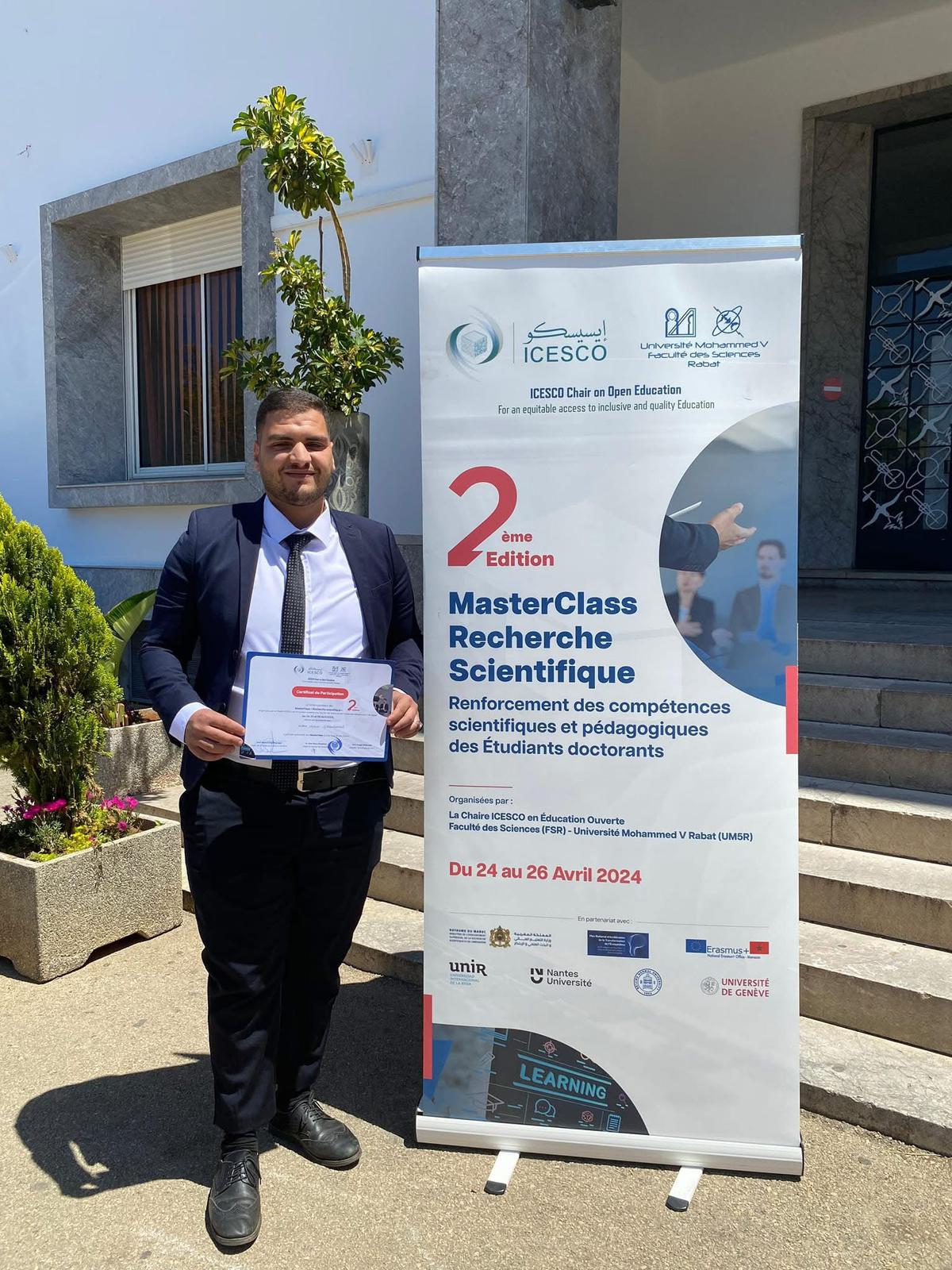 Adam affirms with conviction: “My scientific stay at CY Cergy Paris University represents a decisive stage of my doctoral journey. LT2D brings together professors and internationally renowned specialists in information and communication sciences, language sciences, discourse analysis, argumentation and rhetoric, institutional communication, sociology and media studies. Working alongside these experts allowed me to considerably enrich my theoretical and methodological skills.”
A dual scientific contribution
Consolidation of the conceptual framework
“The scientific contribution of this experience is twofold. On the one hand, it allowed me to consolidate the conceptual framework of my thesis, which focuses on discourse on international political crises and its impact on development, the economy and education. During my first scientific stay at CY, I was able to develop a complete chapter of my thesis, dedicated to the analysis of institutional discourse during the Covid-19 crisis.”
He specifies: “This work is based on approaches developed within the LT2D laboratory, particularly the concept of discursive architecture, proposed by Professor Radut-Gaghi and Mr. Axel Boursier. This methodological orientation allowed me to approach crisis discourse in a more structured and comparative way.”
Opening to new perspectives
“On the other hand, this experience opened me to new research perspectives, particularly around scientific diplomacy, a field that Professor Radut-Gaghi is currently developing and which aligns with my own academic interests. I had the opportunity to participate in several seminars and conferences on this theme, which enriched my reflection and strengthened my commitment to international communication issues.”
Building an international academic network
Adam explains: “In terms of academic network, France offered me an exceptionally dynamic and multicultural environment. Thanks to the support received at the laboratory, I had the opportunity to meet and exchange with major figures in discourse analysis, such as Dominique Maingueneau, Patrick Charaudeau or Marianne Doury. These encounters profoundly nourished my vision of research and allowed me to situate my work in an international perspective.”
“Moreover, the LT2D laboratory, composed of researchers from different countries such as France, Italy, Greece, Romania, Brazil, Iran, Benin or Egypt... constitutes a true laboratory of scientific and human diversity. Daily exchanges with colleagues from different cultural backgrounds have been a source of intellectual and personal enrichment for me.”
A lasting impact
“Finally, this mobility had a lasting impact on my academic career. Even after my return to Morocco, I continued my collaborations with the LT2D laboratory team and participated in several international conferences, notably on Discursive (De)Fragilization (May 2025, CY Cergy Paris University) and the Discourse Analysis association congress (June 2025, Free University of Brussels). These experiences reinforced my conviction that research has no borders and that it is built above all through dialogue and cooperation.”
Career perspectives: an expanded vision
Academic vocation
Adam begins by affirming his primary vocation: “Since the beginning of my doctoral journey, my primary ambition has always been to pursue an academic career. Research and higher education are for me much more than a profession: it is an intellectual and human vocation. I have a real passion for knowledge transmission, student mentoring and active participation in scientific production. After my defense, I would therefore like to move toward a postdoctoral position, then, ultimately, toward a position as a teacher-researcher or associate professor.”
A transformation of professional vision
“However, my experience in France has profoundly broadened my vision of scientific career. Working in such an open and international environment made me discover that the skills developed in my field are also sought beyond the academic world.”
He explains this evolution: “I thus became aware of the growing place occupied by international organizations, European institutions, NGOs and political and strategic expertise companies in the production and analysis of public discourse. These structures need researchers capable of deciphering discursive dynamics, evaluating the impact of public policies and formulating informed recommendations.”
Adam specifies: “Institutions like the European Parliament in Brussels or Strasbourg, or certain international agencies, now offer real opportunities in this field. This fully corresponds to my current interests, particularly through the theme of scientific diplomacy.”
The expanded role of the researcher
“Thus, while research will always remain at the heart of my professional identity, I feel today ready to open my horizons to careers that combine scientific expertise, strategic communication and international commitment. I deeply believe that the role of the researcher is not limited to the university: they can also contribute to informing public decisions and strengthening dialogue between cultures and nations.”
He concludes with this reflection: “This experience taught me that scientific mobility, beyond research, is a human adventure made of encounters, transmission and collective construction of knowledge.”
Advice for future candidates: three essential recommendations
Adam generously shares his advice: “If I were to give advice to a Master 2 student or a young international doctoral student who wishes to carry out part of their research in France, here is what I would tell them:”
First advice: prepare a solid and thoughtful academic application
“The first step is to develop a well-crafted and well-structured application. This includes the relevance of your research topic, its potential impact, and the clarity of your objectives for your stay. It is also essential to highlight your academic skills: your CV, your publications, your presentations. Although this may seem basic, it is important not to underestimate these details. Sometimes, candidates do not take enough care in preparing these simple but crucial elements. Clarity and honesty in presenting your application are key elements to make a difference.”
Second advice: actively search for funding
“Funding is a fundamental aspect of scientific mobility. Fortunately, there are now a multitude of bilateral funding programs between Morocco and France. For Master 2 students, there are dual degree programs between certain Moroccan and French universities, and scholarships like Erasmus. For young researchers, several Franco-Moroccan cooperation programs are available each year, such as the doctoral mobility program, the PHC Toubkal scholarship program, AUF scholarships (Agence Universitaire de la Francophonie), the Eiffel program, as well as other university-specific programs.”
Adam emphasizes: “It is important to remain active and on the lookout for announcements. For this, regularly consult institutional websites such as the Ministry of Higher Education and Innovation website in Morocco, the French Institute, CNRST, or the French Embassy in Morocco. Take the time to study the criteria of each scholarship carefully and prepare your application thoroughly and completely.”
Third advice: be open to learning and adaptability
“The third advice I would give is to be open to learning and ready to adapt. As an international researcher, you will be exposed to new methodological approaches and diverse academic cultures. It is essential to remain curious and adapt to different contexts. Do not focus only on your personal objectives, but also seek to contribute to the local scientific community. Actively participate in seminars, conferences and exchanges, and do not be afraid to question your practices and ideas. This will enrich your experience and help you expand your academic network significantly.”
Mobility: a global investment
“Doctoral mobility is a precious opportunity that goes far beyond the framework of research. It allows personal development, cultural enrichment and broadening of our professional horizons. It is also an investment in the academic future. You will discover new cultures, create links with international experts and enrich your academic network. On a personal level, it transforms our way of thinking, seeing the world and understanding different perspectives. Ultimately, mobility is a human adventure as well as an academic one, and it has a lasting impact on your professional and personal life.”
Conclusion
Adam Aitbenlaassel's journey illustrates the transformative value of international doctoral mobility. Beyond the scientific skills acquired and the academic network built, it is an entire vision of the researcher's role that evolves and enriches through this experience.
Administrative and financial challenges are real, but surmountable through rigorous preparation, perseverance and solidarity among researchers. Bilateral cooperation programs, such as the Franco-Moroccan program from which Adam benefited, play a crucial role in building a dynamic and inclusive French-speaking scientific space.
The Association Bernard Gregory encourages all doctoral students and young doctors to consider international mobility not only as an opportunity for scientific development, but also as a human adventure that broadens professional horizons and contributes to dialogue between cultures and nations.
As Adam emphasizes: research has no borders and is built above all through dialogue, cooperation and the sharing of knowledge.
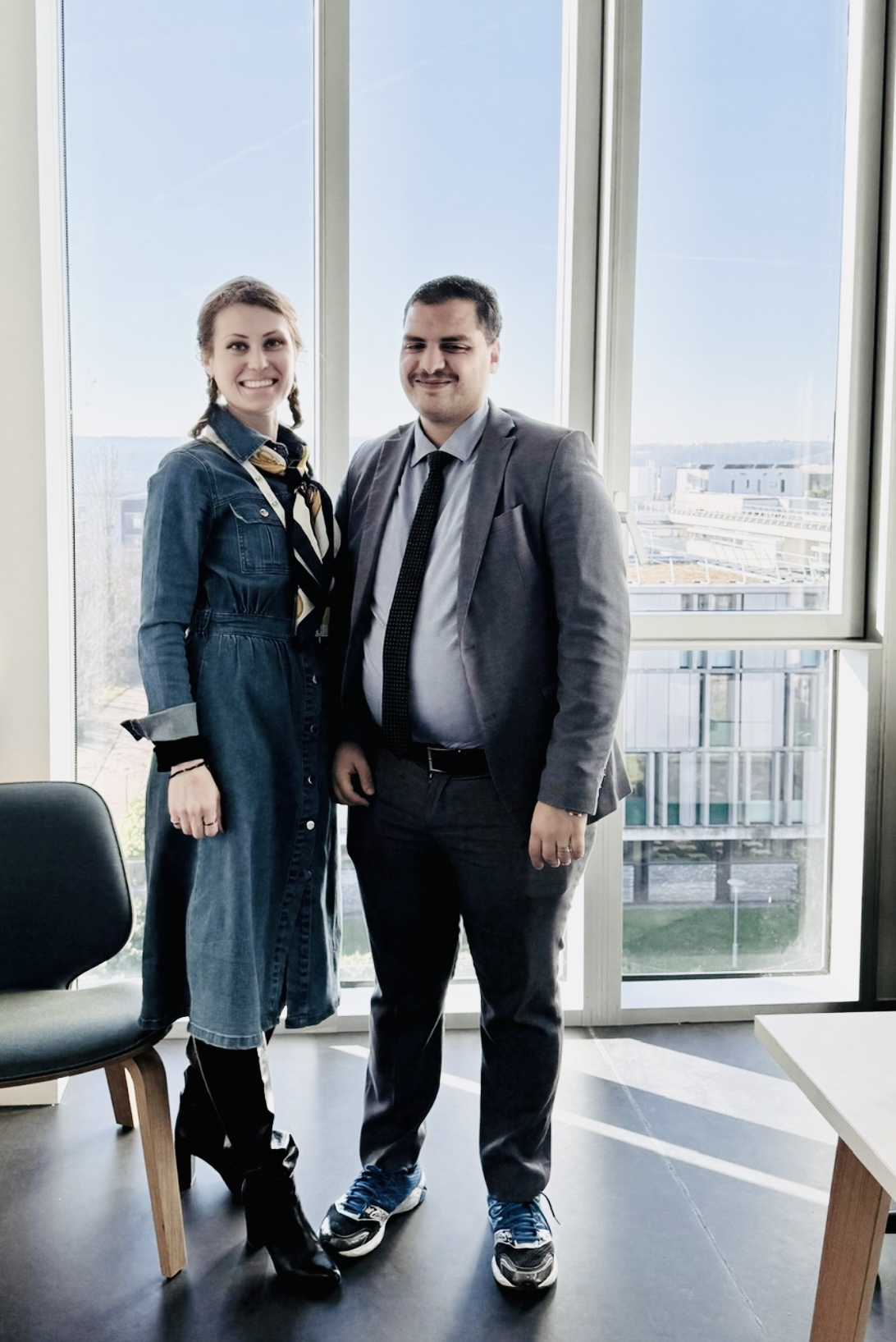
To learn more about international mobility opportunities:
Programs to consult:
Franco-Moroccan doctoral mobility program
Get ABG’s monthly newsletters including news, job offers, grants & fellowships and a selection of relevant events…
Discover our members
 TotalEnergies
  Nantes Université
  Nokia Bell Labs France
  ASNR - Autorité de sûreté nucléaire et de radioprotection - Siège
  Servier
  Tecknowmetrix
  Medicen Paris Region
  Groupe AFNOR - Association française de normalisation
  Laboratoire National de Métrologie et d'Essais - LNE
  Généthon
  ONERA - The French Aerospace Lab
  Institut Sup'biotech de Paris
  ADEME
ADEME  ANRT
ANRT  SUEZ
SUEZ  Ifremer
  Aérocentre, Pôle d'excellence régional